Unhinged Roadside Attractions: The Grave in the Middle of the Road in Indiana
A grave. In the middle of a road. In Indiana. It wasn’t what one would expect to find while driving down a country road in Johnson County, but there it was. Curiosity got the better of me, so I had to dive in to get the full scoop on how someone’s final resting place was in the middle of the road.
Welcome to Unhinged Roadside Attractions, where we’re tracking down the weird, unexpected, and downright bizarre places you can actually visit. And this one might be one of the strangest yet.
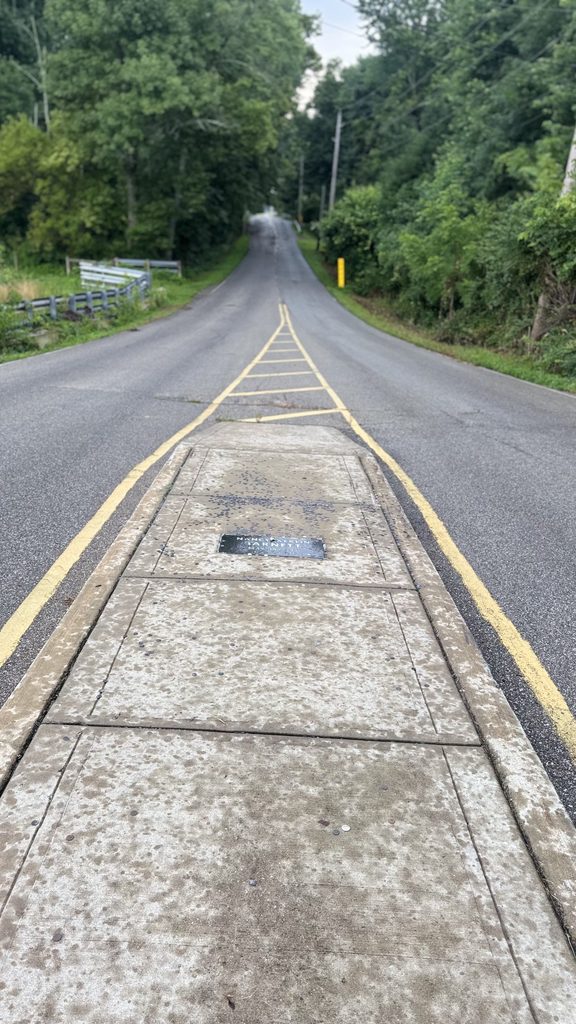
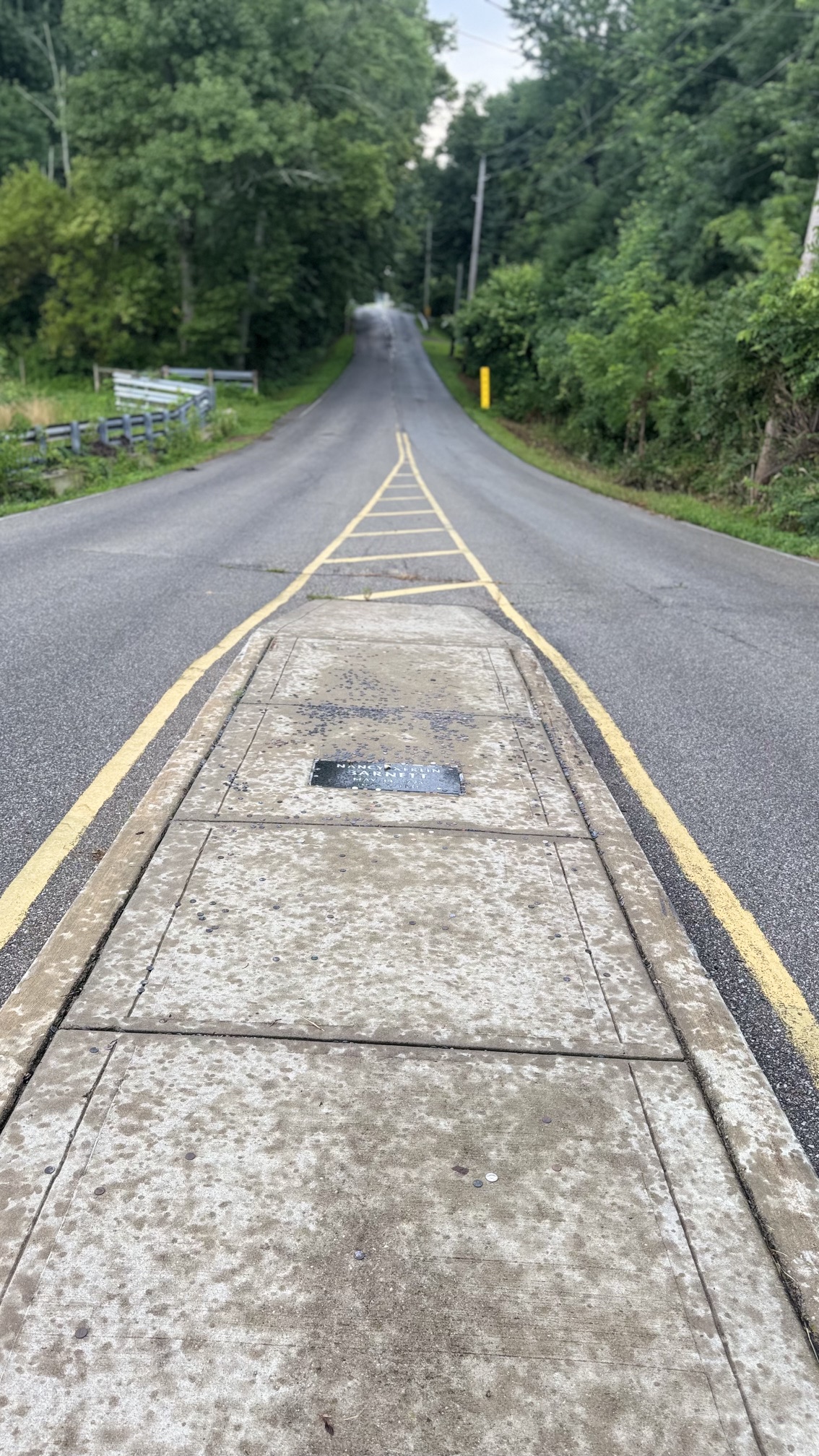
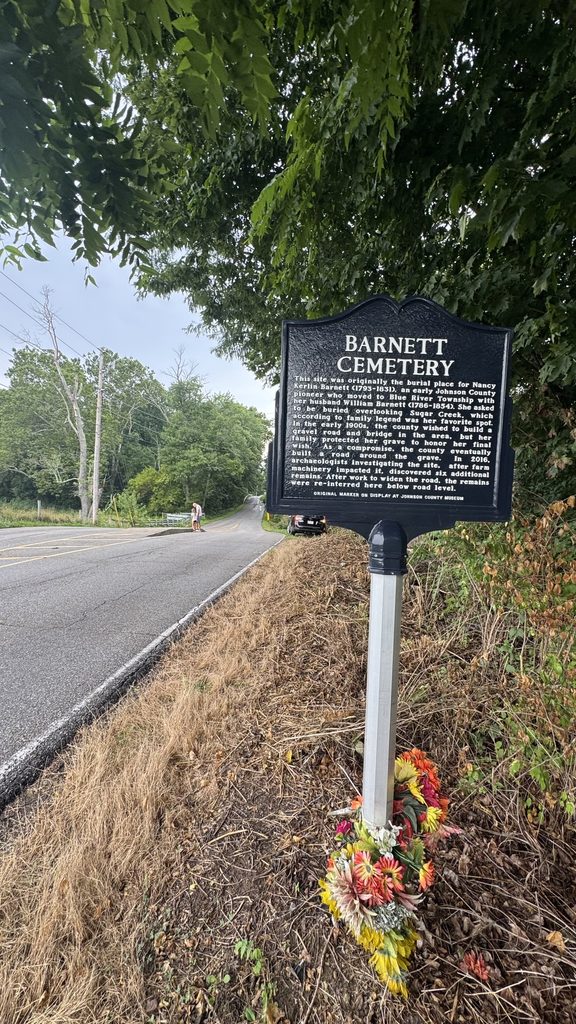
Just outside Franklin, Indiana, a small cemetery sits directly in the middle of County Road 400 South. The road literally splits around the burial site, allowing cars to pass on either side.
This is the final resting place of Nancy Kerlin Barnett, who died in 1831, and the story of how her grave ended up in the middle of a road is a fascinating piece of Johnson County history.
The Story of Nancy Kerlin Barnett
Nancy Kerlin Barnett was born on May 14, 1793, and died on December 1, 1831, at the age of 38.
The Treaty of St. Mary’s in 1818 opened up the “New Chase,” which covered much of central Indiana, to settlers. This led to the earliest settlements in Johnson County in 1820. These first pioneers mostly came from the surrounding states. One such family was William and Nancy Barnett, coming up from Kentucky. William was born in Orange County, Virginia, in 1796, while Nancy was born in 1793. They married on Feb 29, 1808 and had seven children before moving to Blue River Township in 1822.
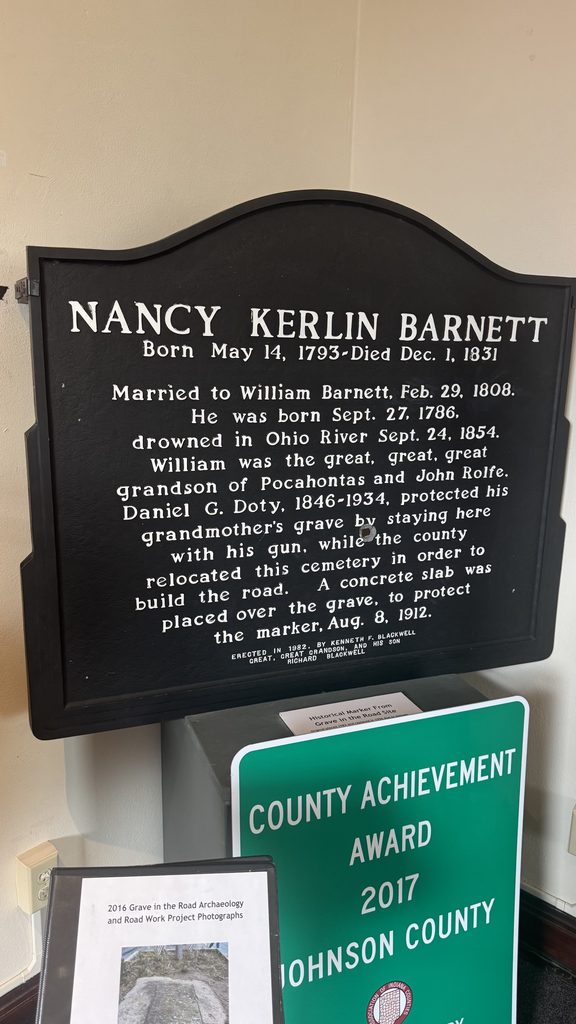
Over the next nine years, they added four more children as they witnessed the county change from wilderness to the beginnings of an important agricultural area. Nancy Barnett died in 1831 of unknown causes. According to family history, she was buried overlooking Sugar Creek because it was her favorite spot in the county.
Interesting Fact: William was the great, great, great grandson of Pocahontas and John Rolfe. William drowned in the Ohio River on Sept 24th, 1854.
According to historical accounts, Nancy’s final request was to be buried on a hill overlooking Sugar Creek. At the time, the area was quiet and rural, with no road running through the middle of it.
Nancy was buried there, and eventually the area became a cemetery containing the graves of other members of the community.
Then the road came along.
How Did a Grave End Up in the Middle of a Road?
By the early 1900s, Johnson County officials needed to build a road through the area. Several graves were relocated so the road could be constructed.
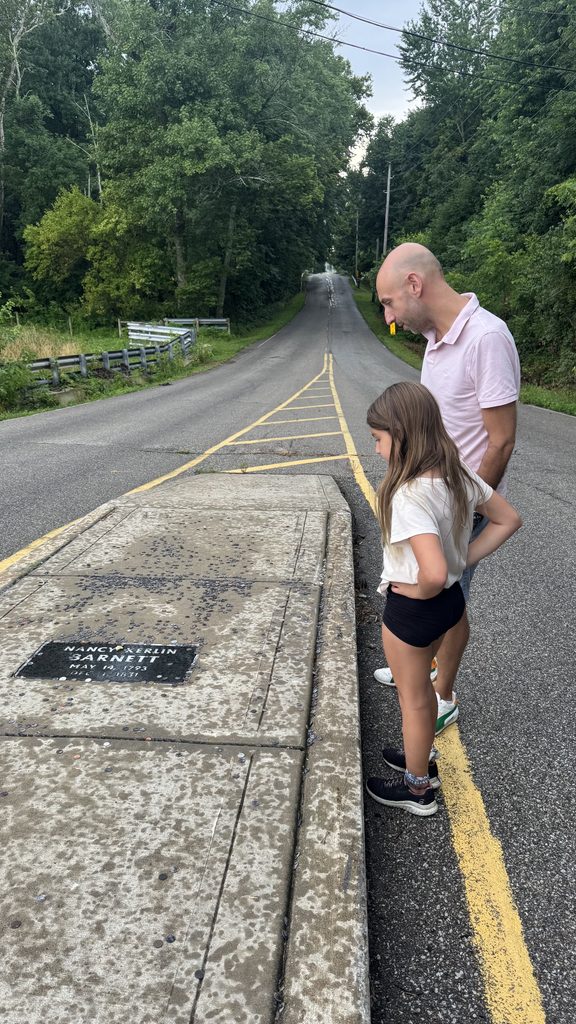
But Nancy’s grave was not moved.
According to the historical account that has been passed down, Nancy’s grandson, Daniel G. Doty, stood guard over her grave with a gun when officials attempted to relocate it. The story says he refused to allow his grandmother’s remains to be moved because she had specifically wanted to be buried there.
And apparently, he was pretty serious about it.
Rather than move Nancy’s grave, the road was built around it. A concrete slab was later placed over the grave in 1912 to protect the marker.
Today, County Road 400 South still divides around the cemetery. One lane goes on either side, and Nancy’s grave remains right in the middle.
It’s Actually a Cemetery, Not Just One Grave
For years, the site was commonly thought to be the grave of Nancy Barnett alone.
That changed in 2016.
As Johnson County prepared to improve and widen County Road 400 South, archaeologists from the University of Indianapolis excavated the burial site as part of the road project.
They made an unexpected discovery.
There wasn’t just one or two people buried there. There were seven.
Archaeologists found Nancy Barnett’s remains along with the remains of six other people: another woman, an older man and four children. The children ranged in age from newborn to approximately 10 years old.
The excavation was conducted so the road could be made safer while preserving the burial site.
The remains were studied and then respectfully reinterred at the location.
The site is now known as Barnett Cemetery.
So technically, when you visit the “Grave in the Road,” you’re looking at a small cemetery—not simply one grave.
Why Is the Grave Still in the Road?
The short answer? Because Nancy’s family fought to keep her burial place undisturbed.The longer answer involves nearly two centuries of changing roads, development and efforts to preserve the historic cemetery.
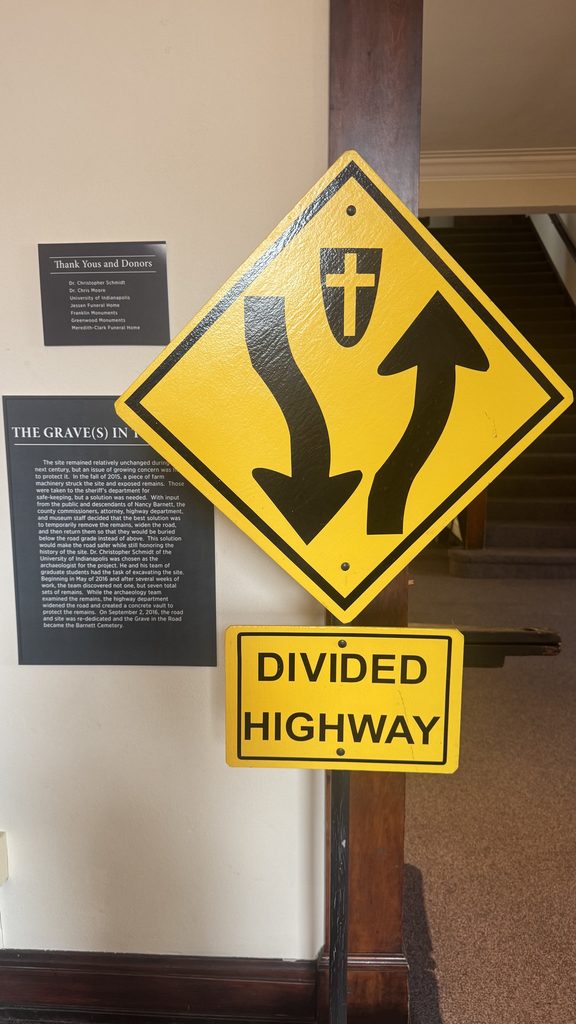
The location became increasingly problematic as traffic increased. There were reports of vehicles and farm equipment striking or coming too close to the burial site because of the unusual road configuration.
In 2016, Johnson County undertook a road improvement project to make County Road 400 South safer.Rather than remove the cemetery, officials worked with archaeologists and Nancy’s descendants to preserve it. The cemetery was lowered and protected as part of the project, while the road continued to split around it.
So nearly 200 years after Nancy was buried there, her final resting place remains in the same general location she chose.
Where Is the Grave in the Road?
The Grave in the Road is located south of Franklin, Indiana, near the community of Amity.
Grave in the Road
6844 E. 400 South
Franklin, IN 46131
The site is on County Road 400 South, west of County Road 700 East. As you approach the cemetery, you’ll see the road split around the small burial site. Look for the historical markers.
A Safety Note
This is an active county road, so please use caution.
There isn’t a traditional roadside attraction parking lot or visitor center. Some visitors have reported pulling onto the grassy area near the site, but conditions can vary, and you should never park or stand somewhere that puts you or other drivers in danger.
Don’t stop in the travel lanes to take pictures.
Visit the Johnson County Museum of History
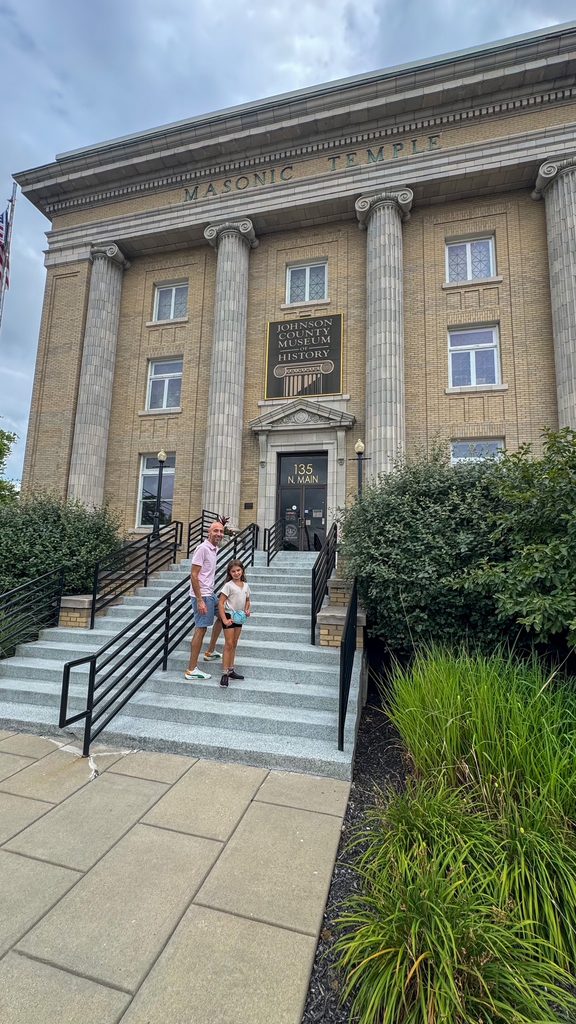
Want to know more about the story before heading out to see the grave? Add a stop at the Johnson County Museum of History in downtown Franklin.
Johnson County Museum of History
135 N. Main Street
Franklin, IN 46131
The museum is operated by the Johnson County Historical Society and explores the history of the county through exhibits covering everything from early settlement to more recent history.
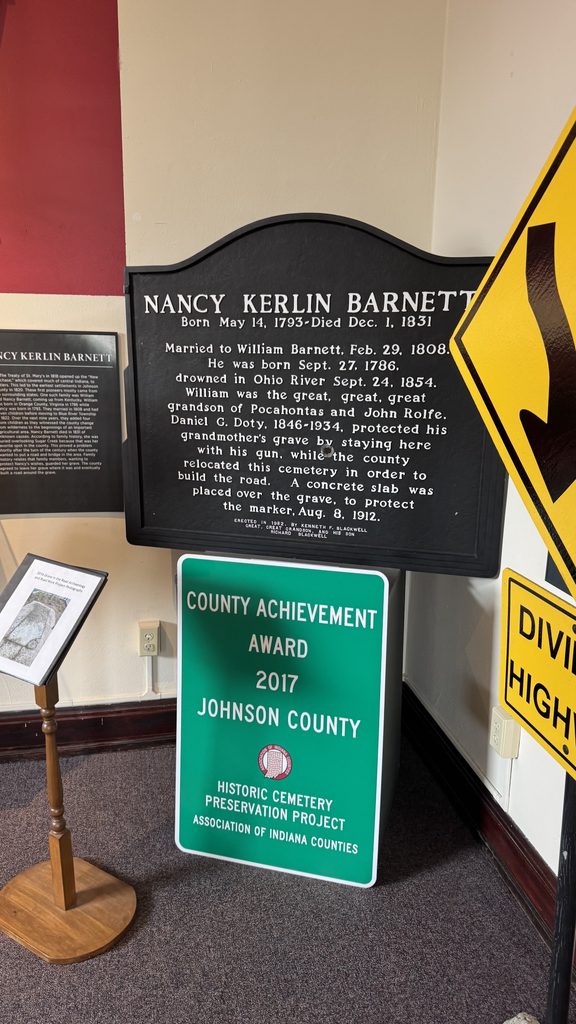
The museum also has material related to the Grave in the Road. Most notably, the original Nancy Kerlin Barnett historical marker that once stood at the gravesite is now housed inside the museum.
The museum is free to visit, making it an easy addition to a Franklin day trip.
Current listed hours are Tuesday through Friday from 9 a.m. to 4 p.m. and Saturday from 10 a.m. to 3 p.m. Because museum hours can change, it’s a good idea to check before making the trip.
The museum’s permanent exhibits also include a transportation exhibit exploring the history of roads, railroads and other forms of transportation in Johnson County.
Please Be Respectful When Visiting
This might be part of a series called Unhinged Roadside Attractions, but there is something important to remember about this particular stop:
This is someone’s grave.
Actually, it’s a cemetery containing the remains of seven people.
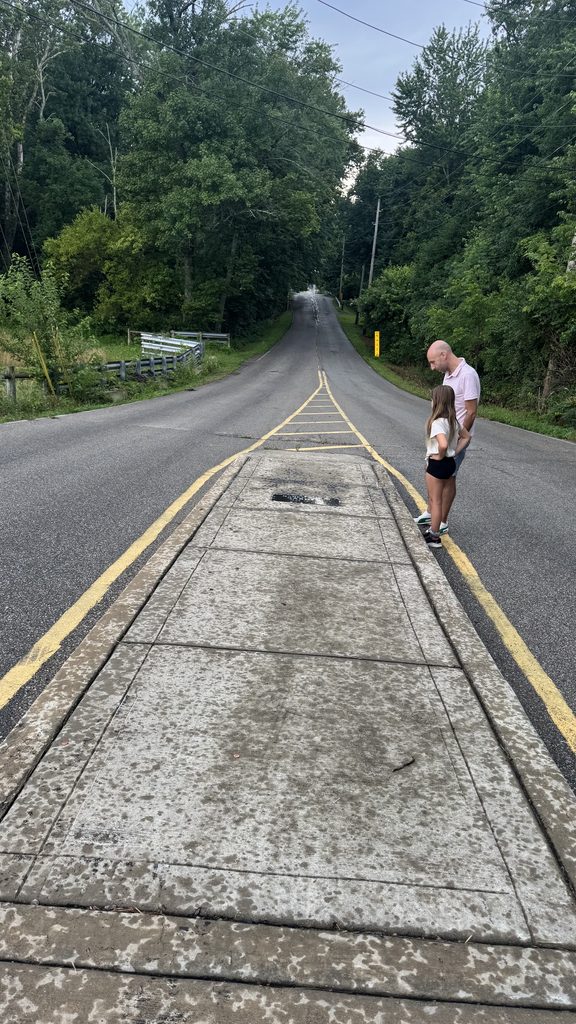
The unusual location makes it fascinating, but it isn’t a prop, photo opportunity or abandoned roadside curiosity.
If you visit:
- Stay off the grave and concrete enclosure.
- Don’t touch or move anything at the site.
- Don’t take flowers, decorations or other items.
- Don’t leave trash behind.
- Don’t trespass onto surrounding property.
- Never stand in the roadway for a photo.
- Be cautious of passing vehicles and farm equipment.
- Keep the area quiet and respectful.
The archaeologists who worked on the site emphasized the importance of remembering that it is a cemetery and that the people buried there deserve respect.
Is the Grave in the Road Worth Visiting?
If you love weird roadside stops, unusual history and places that make you say, “Wait…what am I looking at?”, then absolutely.
The Grave in the Road is one of those places that you can drive past in a matter of seconds, but once you know the story, you’ll probably find yourself slowing down to take a second look.
Just remember: the strange part is where the cemetery is located. The people buried there are very real.
So add it to your list of unusual Indiana stops, visit safely, learn the story, and leave the cemetery exactly as you found it.
One more checked off the Unhinged Roadside Attractions list.
Looking for more Unhinged Roadside Attractions? Check out our Guide to Unhinged and Unique Things To Do In Ohio
Save this for later




3 Comments
Pingback:
Pingback:
Pingback: